A ground handling headset is not an aviation pilot headset. On the ramp, the priorities are engine noise reduction (85–105 dB), all-weather durability, and compatibility with aircraft intercoms or team radios.
The best solutions available in 2026 fall into three main categories: wireless full-duplex systems for multi-user teams, robust wired headsets for cockpit-to-ground communication, and hearing-protection headsets with integrated radio for ramp agents who do not require a cockpit link.
This article provides a factual, unranked overview of the leading products on the market, the technical criteria to evaluate before purchasing, and the questions professional buyers most frequently ask.
Ground handling communication solutions
Explore Globalsys’s communication solutions designed for reliable coordination in demanding ramp operations.
Ground Handling vs. Aviation Pilot Headsets : Key Differences
The specific demands of the ramp environment
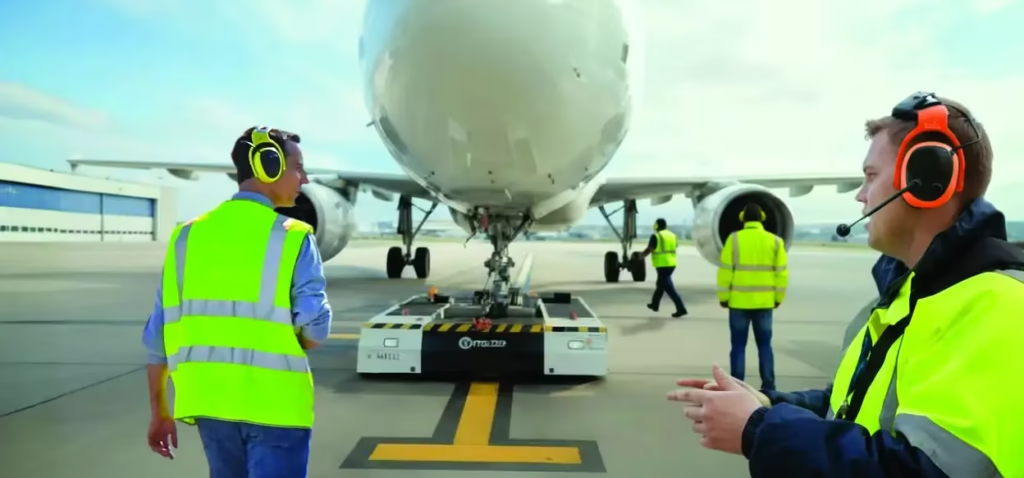
A ramp agent operates in a radically different environment from a cockpit pilot. Background noise on the tarmac typically ranges from 85 to 105 dB, depending on proximity to engines, APUs, and ground traction equipment. Add rain, cold, jet blast, trailing cables, and intense physical movement. A ground handling headset must therefore combine high noise attenuation, mechanical robustness, and compatibility with the communication equipment on the ramp – whether that is the aircraft’s on-board intercom or the team’s portable radios.
A pilot aviation headset, by contrast, is designed for the cockpit: it prioritises light weight, active noise reduction of cabin ambience, and connection to avionics. It is generally neither certified nor built to withstand prolonged exposure to ramp conditions.
Cockpit communication vs. team communication: two distinct requirements
The choice of a ground handling headset depends first on the type of operation to be covered:
- Pushback and towing: the ground agent must communicate directly with the cockpit via the aircraft intercom. Connector compatibility (6.35 mm jack, TP120) is critical.
- De-icing, MRO, multi-team turnaround: several operators must communicate with each other in real time. A multi-user full-duplex system (up to four or five simultaneous users) is more appropriate than a simple PTT setup.
- Ramp agents without a cockpit link (refuelling, baggage handling): the priority shifts to hearing protection and horizontal radio communication within the team.
Wired or wireless: how to choose based on the operation
Wired headsets remain the reference for cockpit-to-ground communication: reliable connection, no battery management, lower cost. The main drawback is limited mobility due to cable length (typically 3 to 12 m in coiled versions).
Wireless systems (DECT, FM/UHF radio) provide freedom of movement up to 300 m around the aircraft. They are particularly suited to de-icing teams and maintenance operations where operators move far from the connection point. In return, they require battery management and carry a higher unit cost.
Key Technical Criteria to Evaluate Before Buying
Before comparing brands, it is worth clarifying the core technical parameters. The five decisive criteria are summarised below:
Criterion | What to check | Why it matters |
|---|---|---|
Noise attenuation | SNR (Europe), NRR (USA), SLC (Australia) — ideally SNR ≥ 28 dB | Tarmac noise reaches 85–105 dB; below 28 dB attenuation, voice intelligibility is compromised |
Communication type | PTT (push-to-talk), VOX (voice-activated), full-duplex (simultaneous two-way) | Full-duplex is essential for pushback and de-icing; PTT is sufficient for a single cockpit-to-ground operator |
Connectivity | 6.35 mm jack, TP120, XLR, Motorola/TETRA/Icom radio connectors | A headset incompatible with the aircraft intercom or team radio is unusable on the ramp |
Number of users | Single operator or multi-user conference (up to 4–5 simultaneous) | For de-icing or MRO operations, multi-user conferencing reduces coordination errors |
Field durability | IP rating, reinforced cables, removable batteries, EN 352 certification | Rain, cold, jet blast: a non-rugged headset fails within weeks of intensive ramp use |
Noise attenuation: SNR, NRR, SLC – what the EN 352 standard means
The European standard EN 352 governs individual hearing protectors against noise. It covers several subcategories: EN 352-1 for passive cup-type protectors, EN 352-6 for headsets with active communication (PTT, intercom). The SNR (Single Number Rating) value expresses noise reduction in dB under standardised conditions. For ramp environments, an SNR of 28 to 33 dB is generally recommended depending on proximity to noise sources. In the United States, the equivalent metric is the NRR (Noise Reduction Rating), and in Australia the SLC80.
Communication type: PTT, VOX, full-duplex
- PTT (Push-to-Talk): on-demand communication activated by a button press. Simple, reliable, and sufficient for a single operator in cockpit-to-ground mode.
- VOX (Voice-Activated): transmission activates on voice, keeping both hands free. Useful in maintenance contexts but sensitive to ambient noise levels.
- Full-duplex: simultaneous two-way communication, like a phone call. Essential for pushback and de-icing operations where immediate responsiveness is a safety requirement.
Connectivity: 6.35 mm jack, TP120, Motorola/TETRA/Icom radio connectors
Connectivity is often the sticking point when purchasing. Aircraft intercoms use proprietary connectors that vary by manufacturer (TP120 for many Airbus and Boeing aircraft, 6.35 mm jack on many ground equipment units). Motorola, TETRA, and Icom portable radios each have their own connectors. Verifying compatibility before ordering is essential – most manufacturers offer adapters or multi-connector variants.
Number of simultaneous users and wireless range
For wireless systems, two parameters are decisive: the number of users who can communicate simultaneously (typically two to five depending on the system) and the radio range (from 100 m to more than 300 m depending on DECT or UHF radio technology and the presence of obstacles). For a de-icing operation involving a truck, the cockpit, and multiple ramp agents, a system limited to two simultaneous users is insufficient.
Field durability: IP rating, removable batteries, reinforced cables
A ground handling headset must withstand rain, frost, impacts, and cables caught in landing gear. Key points to verify: the IP rating of the microphone (at minimum IP54 for outdoor use), reinforced or coiled cables (reduced snagging risk), field-replaceable removable batteries for wireless systems, and the availability of spare parts and ear cushions — often overlooked but essential for long-term equipment life.
2026 Market Comparison: Leading Solutions
The table below maps the most widely cited ground handling headset solutions available in 2026. This is not a ranking but a factual overview designed to facilitate comparison by use case. For a comprehensive list of manufacturers and models, the AeroExpo – Ground Support Aviation Headset platform lists the full range of equipment suppliers in this category.
Brand | Model | Type | Attenuation | Communication | Wireless | Primary use |
|---|---|---|---|---|---|---|
GLOBALSYS | Airlink 2085 | Wireless (DECT) | SNR 32 dB | Full-duplex, VOX | Yes – 300 m | Pushback, de-icing, MRO multi-user |
GLOBALSYS | HEA 371 | Wired | SNR 32 dB / NRR 25 dB | PTT / radio | No | Wired ground support, ramp, maintenance |
David Clark | H9935 / 9900 Series | Wireless (BT/DECT) | NRR 24 dB | Full-duplex, PTT | Yes | Pushback, cockpit-to-ground comms |
David Clark | H3312 / H7010 | Wired | NRR 26 dB | PTT, 6.35 mm jack | No | Robust wired solution, budget-friendly |
3M Peltor | WS ProTac XPI | Wired / BT | SNR 33 dB | Radio + Bluetooth | BT option | PPE + comms, tarmac and hangar |
3M Peltor | CH-3 | Wireless radio | SNR 29 dB | FM/AM radio, VOX | Yes | Ramp mobility without cockpit intercom |
Sonetics | APEX / Aviation Wireless | Wireless | NRR 25 dB | Full-duplex, listen-through | Yes | Multi-operator teams, extended comfort |
Inbertec | UA1000G / UA2000G | Wired | SNR 28–32 dB | PTT, noise-cancelling mic | No | Wired ground support, de-icing, pushback |
Sources: manufacturer technical datasheets, AeroExpo product listings, field feedback from ramp agents (Reddit r/aviationmaintenance, professional ground handling forums, 2025–2026).
For pushback and cockpit-to-ground communication
Pushback is the operation that places the most demanding communication requirements: the signal must be reliable, instantaneous, and compatible with the aircraft intercom. Wired solutions with a 6.35 mm jack or TP120 connector remain the standard in this context.
- David Clark H9935 / 9900 Series: the historical reference for pushback operations. Robust, well-documented, and widely available through aviation distributors. Wireless version available (DECT/BT).
- David Clark H3312 / H7010: reliable, cost-effective wired solution, widespread among airlines and ground handlers seeking a standard workhorse without a premium budget.
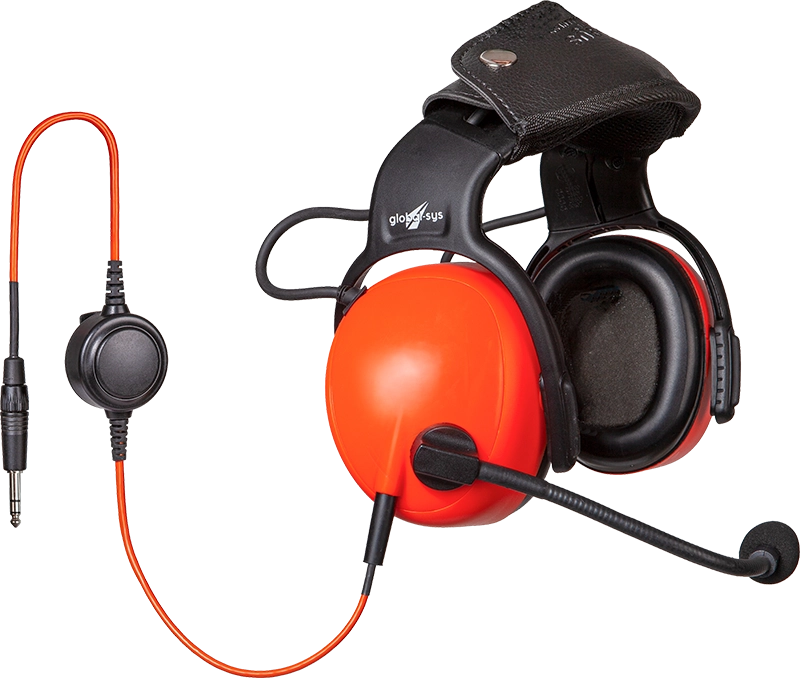
- GLOBALSYS HEA 371: French-manufactured wired headset, SNR 32 dB, waterproof rotating microphone, available in 6.35 mm jack and TP120. Certified EN 352-1 and EN 352-6. Field-tested by ground handling operators across Europe.
For multi-user operations: de-icing, MRO, turnaround
Operations involving multiple simultaneous participants – particularly de-icing (bucket operator, truck driver, cockpit communication) and MRO operations (technicians moving around the aircraft) – require a multi-user full-duplex wireless system.
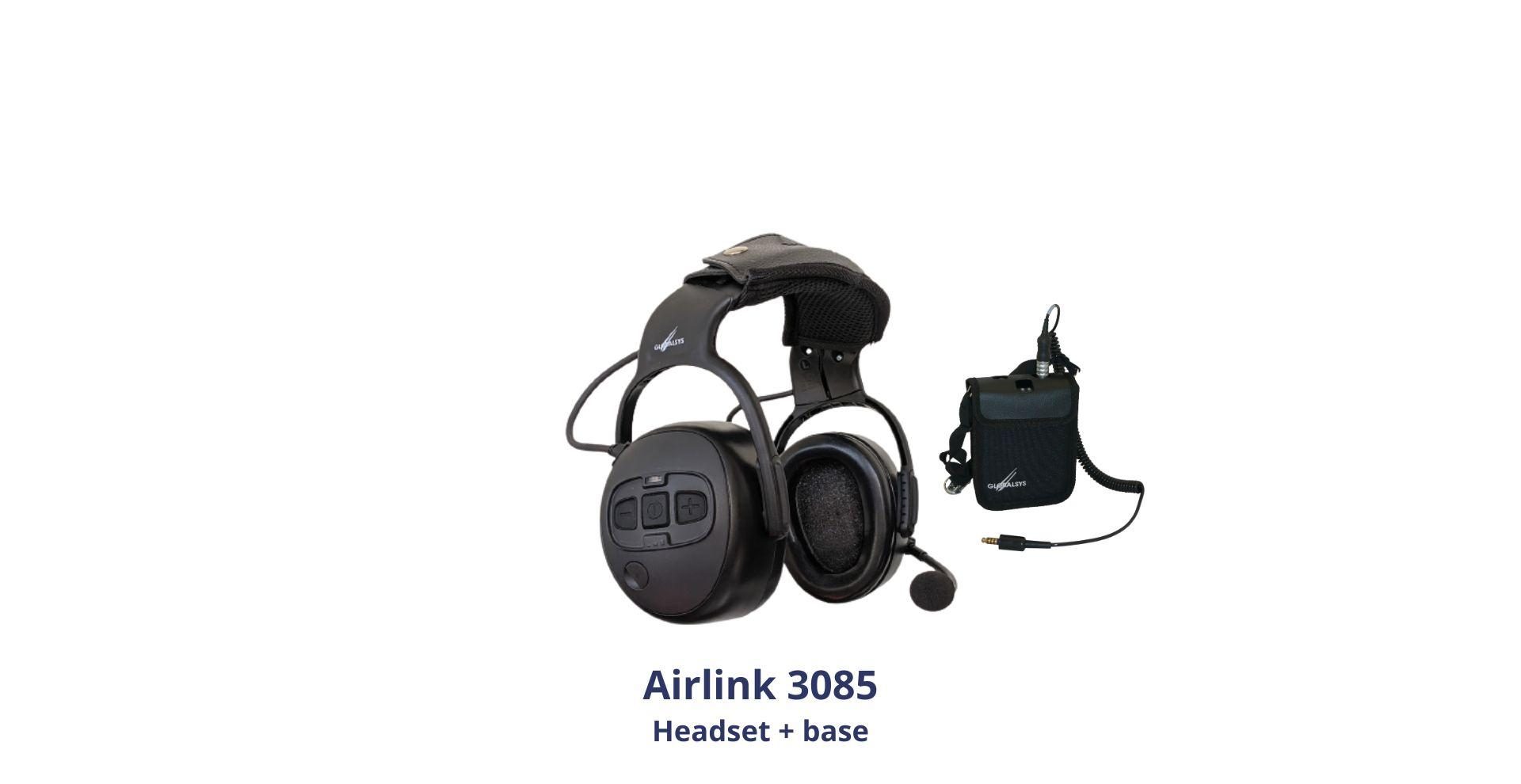
- GLOBALSYS Airlink 2085: DECT full-duplex wireless system for up to four to five simultaneous users, 300 m range, 12-hour battery life, field-removable batteries, noise-cancelling microphone, SNR 32 dB. Used by Airbus, Swissport, American Airlines, Menzies Aviation, and other major ground handling companies. The system includes an aircraft base station, a beltpack compatible with existing wired headsets, and a desktop unit for supervisors.
- Sonetics APEX / Aviation Wireless: full-duplex wireless system with listen-through technology (situational awareness preserved), suited to teams that need to remain aware of their surrounding environment while communicating.
For teams working without a cockpit link: PPE + radio
For agents whose primary need is hearing protection combined with horizontal radio communication (refuelling, baggage handling, aircraft servicing), headsets combining noise-attenuating cups with integrated radio are more appropriate.
- 3M Peltor WS ProTac XPI: SNR 33 dB hearing protection with intelligent attenuation technology and Bluetooth/radio integration. A reference in airport environments where the headset serves primarily as personal protective equipment (PPE). Widely available through safety and industrial distributors.
- 3M Peltor CH-3: lighter wireless radio solution for ramp mobility where no cockpit intercom is required.
- Inbertec UA1000G / UA2000G / UA5000G: passive noise-reduction wired series with noise-cancelling microphone and PTT. Widely distributed through platforms such as AeroExpo, suited to teams seeking a cost-controlled standard solution.
For large-scale wired deployments on a controlled budget
When fleet size is large, budgets are constrained, and operations do not require wireless mobility, wired headsets offer the best reliability-to-total-cost-of-ownership ratio. Coiled cables (up to 12 m extended) and waterproof microphones are key durability criteria for long-term ramp use.
Where to Source and Compare Ground Handling Headsets
The ground handling headset market is distributed through several distinct channels:
- Specialist aviation platforms: AeroExpo (aeroexpo.online) is the reference platform for comparing manufacturer offers and contacting equipment suppliers directly. It lists dozens of ground support headset providers, with filters by technology, connector type, and brand.
- Direct from manufacturers: GLOBALSYS, David Clark, Sonetics, Inbertec, and 3M Peltor all have dedicated commercial teams for the aviation sector and can arrange field trials and on-site demonstrations.
- Specialist aviation distributors: First Source Wireless, Proserv Aviation, Yeager Aerospace, and others offer multi-brand ranges and can assist buyers with connector compatibility and certification questions.
- Trade shows: inter Airport Europe, Aircraft Interiors Expo (AIX), and the IATA Ground Handling Conference are ideal venues to test equipment hands-on and meet manufacturers directly.
FAQ: Frequently Asked Questions About Ground Handling Headsets
Can a pilot aviation headset be used for ground handling operations?
No, in the vast majority of cases. A pilot aviation headset is designed for the cockpit – it prioritises light weight, active noise reduction of cabin ambience, and avionics connectivity – and is neither certified nor built for ramp conditions. On the tarmac, the mechanical demands (cables, impacts, rain), noise levels, and communication types (aircraft intercom, team radio) all require equipment specifically designed for ground handling use.
What noise attenuation is recommended on the ramp?
For exposure to aircraft engine or APU noise (typically 90 to 105 dB in close proximity), an SNR of 28 to 33 dB is recommended under the EN 352 standard. Below 28 dB, voice intelligibility may be compromised and hearing protection may fall short of requirements under the European Noise at Work Directive (2003/10/EC). In the United States, OSHA guidelines reference the NRR metric, where equivalent protection levels apply.
Full-duplex vs. PTT: what is the operational difference for a ramp team?
In PTT mode, only one person speaks at a time while others listen – simple and reliable for a single operator in cockpit-to-ground mode. In full-duplex mode, all conference members can speak and listen simultaneously, like a phone call. For de-icing or pushback involving multiple participants, full-duplex reduces reaction times and coordination errors. This is an operational safety difference, not merely a comfort improvement.
Is EN 352 certification mandatory for ramp operations?
European Directive 2003/10/EC requires employers to provide certified hearing protection when exposure exceeds 80 dB(A). On the ramp, this threshold is almost always exceeded. EN 352-1 certification (passive cup headset) or EN 352-6 (headset with active communication) is therefore strongly recommended and is often a contractual requirement in airline and ground handler procurement specifications.
How do you connect a ground support headset to an aircraft intercom?
Connector types vary by aircraft and headset manufacturer. The 6.35 mm stereo jack is the most common connector on ramp equipment. The TP120 connector is used on many Airbus and Boeing aircraft intercoms. Adapters are available from manufacturers and distributors. If in doubt, verify the connector type on the aircraft’s external intercom panel before ordering.
What battery life can be expected from a wireless headset during a long rotation?
Wireless systems currently on the market typically offer 8 to 14 hours of battery life per charge. The GLOBALSYS Airlink 2085 is rated at approximately 12 hours per battery, with field-removable and replaceable battery packs. For long rotations – overnight stops, continuous MRO operations – the availability of spare batteries and USB-C field charging are practical selection criteria worth verifying.
Conclusion: Choose Based on Your Operation, Not Just the Brand
There is no universal ground handling headset. The right equipment depends above all on the operation it needs to support: a robust wired headset is sufficient for standard cockpit-to-ground pushback communication; a multi-user wireless full-duplex system is essential for de-icing or maintenance operations involving several simultaneous participants; a PPE headset with integrated radio addresses the needs of ramp agents who operate without a cockpit link.
Across all use cases, the decisive criteria remain the same: EN 352-certified noise attenuation, connector compatibility with the aircraft intercom or team radio, field durability, and long-term availability of spare parts. Comparing offers on AeroExpo or directly with manufacturers is the most effective starting point for narrowing down the right solution for your specific operational context.